Newsletter Subscribe
Enter your email address below and subscribe to our newsletter

 ByJohn A
Electrical distribution systems need equipment that can handle changing loads, maintain dependable voltage levels, and fit within the physical limits of commercial, industrial, and utility sites. A 3 phase pad mounted transformer is commonly used for this purpose because its enclosed design allows distribution equipment to be installed outdoors without requiring a dedicated indoor transformer room.
These transformers are found near commercial buildings, residential developments, manufacturing facilities, agricultural operations, and utility distribution networks. Their job may seem straightforward, but choosing and installing the right unit requires attention to electrical ratings, site conditions, safety requirements, and expected demand.
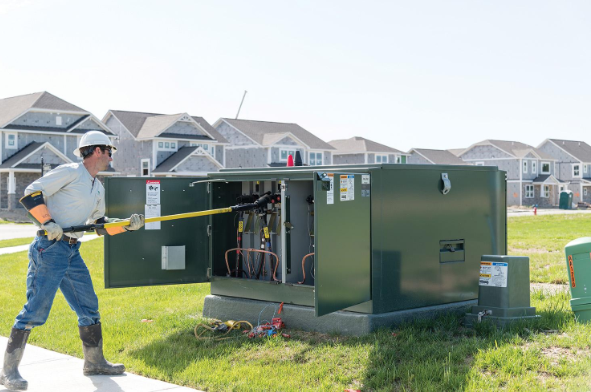
A pad-mounted transformer is installed on a concrete pad or another suitable foundation. It receives electricity at a higher primary voltage and reduces it to a lower secondary voltage suitable for equipment, buildings, and local distribution circuits.
The enclosure protects internal electrical components from routine outdoor exposure and helps restrict access to energized equipment. Many units use a dead-front configuration, which reduces the possibility of accidental contact with energized parts during normal access procedures.
Three-phase models contain three primary and secondary phases within one transformer assembly. This arrangement makes them suitable for electrical systems that distribute power across three phases rather than relying on a single-phase supply.
See also: How AI Helps Businesses Design Flyers Faster
Three-phase electricity is widely used for commercial and industrial loads because it can deliver substantial power with efficient use of conductors. Motors, pumps, HVAC systems, production machinery, and other equipment commonly operate on three-phase electrical systems.
A three phase distribution transformer reduces the voltage from the utility distribution level to the voltage required by downstream electrical equipment. Its capacity must correspond with the expected electrical demand. Undersizing can create excessive loading, while selecting a substantially oversized unit may increase equipment and installation costs without providing a practical benefit.
Load characteristics also matter. Facilities with motors or other equipment that produce starting currents may require additional capacity compared with sites dominated by relatively steady loads.
Although transformer designs differ by manufacturer and application, several components are commonly associated with pad-mounted three-phase equipment.
Transformer core and windings: The core provides the magnetic path, while the windings transfer electrical energy between voltage levels through electromagnetic induction.
Primary terminals: These connect the transformer to the incoming medium-voltage distribution circuit.
Secondary terminals: The lower-voltage output connects to the facility’s distribution equipment or downstream network.
Bushings: Bushings provide insulated connection points where conductors enter or leave the transformer.
Protective devices: Fuses, switches, and other protective components may be incorporated into the transformer or associated equipment to help isolate faults.
Enclosure: The outdoor cabinet protects the internal components against environmental exposure and helps limit unauthorized access.
The exact configuration depends on voltage, capacity, utility requirements, connection arrangement, and applicable electrical standards.
Transformer capacity is normally expressed in kilovolt-amperes (kVA). Determining the appropriate rating begins with calculating the expected electrical load rather than simply selecting a size based on the building’s physical dimensions.
Engineers may examine connected loads, demand factors, motor loads, future expansion plans, and operating schedules. The resulting calculation helps determine how much capacity the transformer should provide under normal operating conditions.
A 3 phase distribution transformer may serve a wide range of applications, so there is no universal rating suitable for every installation. The selected unit should match the electrical characteristics of the site and leave an appropriate operating margin.
Temperature and environmental conditions can also affect transformer performance. Installations exposed to high ambient temperatures, limited ventilation, flooding risks, or other demanding conditions may require additional design considerations.
A pad-mounted transformer needs a suitable location with adequate clearance around the enclosure. The foundation must support the equipment and remain stable under local soil and environmental conditions.
Accessibility is another practical concern. Utility personnel and qualified electricians may need to inspect, test, maintain, or replace the equipment during its service life. Placing the transformer behind permanent structures, in restricted areas, or where vehicles can easily collide with it can create avoidable maintenance and safety problems.
Drainage should also be considered. Standing water around the foundation can contribute to corrosion and other site-related problems. In areas with flood exposure, the installation may require additional protection based on local requirements.
The incoming and outgoing cable routes should be planned before installation. Adequate bending space, conduit placement, grounding arrangements, and termination requirements can affect the overall layout.
Outdoor transformer enclosures are designed with safety in mind, but they still contain potentially lethal electrical energy. Only qualified personnel following appropriate electrical safety procedures should access energized equipment.
Routine maintenance may include visual inspections, checking for signs of corrosion or physical damage, examining connections, reviewing fluid levels where applicable, and testing protective equipment according to the manufacturer’s recommendations and the site’s maintenance program.
Oil-filled transformers may require additional monitoring because insulating fluid is involved in cooling and electrical insulation. Dry-type designs have different maintenance requirements and may be selected for particular environmental or application conditions.
Keeping vegetation, stored materials, vehicles, and other obstructions away from the transformer also helps maintain access and reduces physical hazards.
Three-phase pad-mounted equipment is used across several types of electrical infrastructure.
Commercial properties may use transformers to supply office buildings, shopping centers, warehouses, and other facilities. Industrial sites often require them for motors, machinery, process equipment, and large HVAC systems.
Residential developments can also use three-phase units where the local distribution design requires them. Agricultural facilities may need transformers for irrigation pumps, processing equipment, refrigeration, and other electrically powered systems.
Utility companies use pad-mounted transformers as part of distribution networks because the equipment can be installed outdoors near the loads being served.
The term three phase pad mount transformer generally describes a transformer designed for outdoor installation on a pad and configured for three-phase electrical service. Specifications can vary considerably between models.
Buyers and engineers may compare primary and secondary voltage, kVA rating, impedance, connection configuration, enclosure construction, cooling method, efficiency, protective equipment, and applicable standards.
The physical footprint can matter as well. Available space, required clearances, cable access, and transportation considerations should be reviewed before ordering equipment.
Another consideration is whether the transformer will serve a new installation or replace existing equipment. Replacement projects may have to match existing voltage characteristics and connection arrangements while fitting within an established site layout.
Transformer selection should account for the expected service period rather than focusing only on the initial purchase. Electrical demand can change as a facility adds equipment, expands production, or modifies its operating schedule.
Regular inspection records can help identify developing issues before they become major equipment failures. Monitoring load levels can also reveal whether the transformer is operating close to its rated capacity.
Manufacturers provide specific installation, operating, and maintenance instructions for their equipment. Following those instructions helps maintain expected performance and supports safe operation throughout the transformer’s working life.
Before purchasing a transformer, gather the electrical information required for accurate equipment selection. This typically includes primary voltage, secondary voltage, system frequency, required kVA capacity, phase configuration, connection requirements, installation environment, and applicable utility specifications.
The project team should also review site dimensions, foundation requirements, cable routing, grounding, access, and local electrical regulations.
Careful planning reduces the chance of ordering equipment that cannot meet the site’s electrical requirements or physical constraints. It also makes installation easier because critical details have been addressed before the transformer arrives.
A properly selected 3 phase pad mounted transformer can provide a practical connection between medium-voltage distribution networks and the lower-voltage electrical systems used by buildings and facilities. Understanding its ratings, components, installation requirements, and maintenance needs gives engineers, contractors, and property owners a clearer basis for making equipment decisions.